
We as customers have to be conscious and careful to sidestep numerous types of frauds made possible under a mindless shift to a digital ecosystem without customer-redress procedures, warns Debashis Basu.

'He didn't implement good policies for good politics.' 'He never worked on comprehensive policy-making.' 'In Kejriwal's own constituency youths are jobless.'

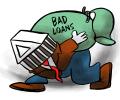
Banks' bad loans might cross Rs 10 lakh crore by the end of this fiscal, mainly on account of slippages in retail and MSME sectors, a study said on Tuesday. "NPAs are expected to rise to 8.5-9 per cent by March 2022, driven by slippages in retail, Micro, Small and Medium Enterprise (MSME) accounts, besides some restructured assets," the study by industry body Assocham and ratings firm Crisil said. The study titled 'Reinforcing the Code' said the Gross Non-Performing Assets (GNPAs) of banks are expected to cross Rs 10 lakh crore by March 2022.
If the banks throw caution to the winds for building loan books, the hydra-headed bad loans may resurface and spoil the party, warns Tamal Bandyopadhyay.

However, financial flows to the economy remained constrained because of decline in the amount of equity finance raised from the capital markets and stress in the NBFC sector, Finance Minister Nirmala Sitharaman pointed out.

Over 100 Indian immigrants, including 33 each from Haryana and Gujarat, 30 from Punjab, and several from other states, were deported from the US after undertaking perilous journeys filled with extortion and hardship. The returnees landed in Amritsar in a US military plane and are now back home, facing huge debts and emotional trauma. Many of them were lured by promises of a better life in the US but fell victim to human trafficking and extortion rings. The families of the deportees are demanding strict action against the travel agents who facilitated their illegal journeys.

Delhi faces a severe financial crunch and the deficit is largely due to numerous welfare schemes without adequate revenue flowing in. The success of welfare schemes and electoral promises will need careful financial planning and out of the box thinking to whip up additional revenue, notes Ramesh Menon.
Banks might not have realised the exact implication of risky projects under PPP projects, which were getting implemented under high leverage
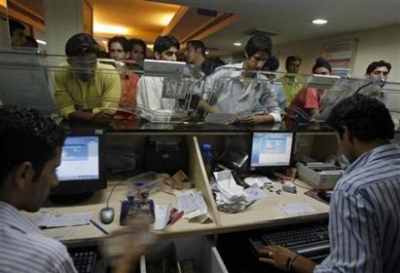
The spike at private sector lenders like ICICI Bank and Axis Bank follows a push to grab market share from India's dominant state banks.

The average time lag between the date of occurrence of a fraud and its detection is 23 months; for large frauds (Rs 100 crore and above), it was 57 months.

'Some of the astounding proposals, if translated into statutory provisions, would be suicidal.' 'This would not be a wonder cure for increasing insurance penetration and only result in mushrooming growth of players like paan kiosks with deleterious consequences.'

State Bank of India expects decent growth in FY16.

The recent run on the US-based Silicon Valley Bank (SVB) and the subsequent seizure of its assets by the regulators may have sparked a global wave of risk aversion, particularly for start-ups. However, the Indian banking sector is unlikely to be a victim of any contagion effects, said analysts. he bank, which played a big role in financing start-ups and technology players, faced stress after incurring huge losses on its holdings of US bonds, following the most-aggressive monetary tightening cycle by the Federal Reserve in around four decades.
Deputy Governor K C Chakrabarty says monetary policy to ease once inflation comes down.

'It is the first technology in history which is not just a tool, it is an agent.' Yuval Noah Harari on the dangers on AI.

Bigger state-run banks such as Bank of Baroda, Punjab National Bank and Union Bank have also seen their bad loans rising in the December quarter.

'Maharashtra is virtually in a debt trap.'

If growth reverts to the pre-Covid level, a lot of people may have to temper their rosy optimism, points out Debashis Basu.

Nobody is held accountable for lapses, no matter how badly it affects the person or business whose accounts are frozen. Nor is there compensation for losses. Most people get to know their accounts are blocked only when a cheque bounces, points out Debashis Basu.
Rising non-performing assets are a biggest concern for India's PSU banks.

The drop in net interest margin will separate the men from the boys, explains Tamal Bandyopadhyay.
Bankers said they are looking outside the bankruptcy courts and will be able to resolve a few debts in the power sector before January-end.

'The Casa ratio is at 33.4 per cent, which has to keep improving. Right now, there is a bit of liquidity pressure in the market.'

Of the total 199 small and medium enterprises (SMEs) listed this year so far, 22 had an issue size of less than Rs 10 crore, which the Securities and Exchange Board of India (Sebi) will no longer allow in the listed ecosystem after its recent consultation paper. The market regulator on Tuesday proposed an overhaul of the rules governing the initial public offerings (IPOs) of SMEs and corporate governance norms for listed SMEs, following concerns over 'systemic risk' seen in the ecosystem with instances of fund diversion and price manipulation.

The United Forum of Bank Unions (UFBU), an umbrella body of nine unions, on Tuesday gave a call for a two-day strike from March 15 to protest against the proposed privatisation of two state-owned lenders. In the Union Budget presented last week, Finance Minister Nirmala Sitharaman announced the privatisation of two Public Sector Banks (PSBs) as part of its disinvestment plan. The government has already privatised IDBI Bank by selling its majority stake in the lender to LIC in 2019 and merged 14 public sector banks in the last four years.

Refusing to share her exact concerns, Mary Kom said she would rather discuss them in the meeting with Mandaviya and BFI top brass.

IMAGES from the Premier League matches played on Sunday

For the banking system a new cycle starts in FY2024. It's fraught with fresh challenges on asset quality and profitability, warns Tamal Bandyopadhyay.
The PCA plan covers various suggestions or measures to recover non-performing assets (NPAs), reduce costs, boost capital, downsize risk-weighted assets, and improve profitability, among others. The LVB management is in the process of implementing all of these, said sources.

If the index is unable to sustain above 24,500 levels, technically it can then slip to its 200-DMA placed at 23,365 levels.

India's banking sector, dominated by more than two-dozen state-run lenders, has been hobbled by its highest bad-loan ratio.
The broader economy risks a potential flight of foreign portfolio capital, therefore pressure on the rupee and more bad news on the stock market, warns T N Ninan.

Apart from the emotional value attached to buying gold, the yellow metal offers protection against inflation, interest rate spikes, currency and geopolitical risks, says Anamika Pareek.

'That was my mistake.' 'Gautam Adani was not involved in forming the Maharashtra government.' 'Adani was not there in the meeting.' 'The meeting was at his guest house and we were sitting in his guest house.'

Flush with liquidity, banks are eager to lend. And, therein lies the problem, warns Tamal Bandyopadhyay.

A peek into the life of a public-sector banker who did well professionally, but paid a price for it, points out Tamal Bandyopadhyay.

'We are going to need more technical people in government.' 'You can't expect a generalist to understand the complicated world of financial engineering.' 'I regret to say that most of our politicians have no competence to deal with these things. Nor is there a willingness to learn.'

New-generation private sector banks such as ICICI, HDFC, Axis, Kotak etcetera owe their existence to the recommendations of the first Narasimham Committee.
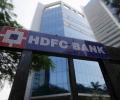
Global rating agency Moody's on Monday said HDFC Bank's multiple digital outages are credit negative as such recurring incidents could lead to moderation in revenue and flight of customers to other banks. The recurring outages also risk hurting the bank's brand perception among a growing and increasingly digitally savvy customer base, and increases the potential that clients switch to other banks, which would lead to a reduction in revenue and low-cost retail funding, Moody's said in a statement.
 © 2026 Rediff.com - Advertise with us - Disclaimer - Privacy Policy - Sitemap - Feedback - About us - Terms of use - Grievances